Space Exploration Technologies Corp. (SpaceX) designs, manufactures, and launches reusable rockets and spacecraft. The company operates Falcon 9, Falcon Heavy, Dragon, Starlink, and the government-focused Starshield line while continuing to develop Starship for high-cadence heavy-lift missions to the Moon, Mars, and beyond. Starlink crossed 12 million customers across 160+ countries on June 4, 2026 and the constellation now exceeds 10,400 working satellites in orbit. Following the February 2026 xAI merger, SpaceX also operates the Memphis Colossus 1 supercomputer as an AI hyperscaler — disclosing roughly $70B+ of contracted compute revenue across an Anthropic deal ($1.25B/month through May 2029) and a Google deal ($920M/month from October 2026 through June 2029). SpaceX completed the largest IPO in history on June 12, 2026, debuting on Nasdaq under ticker SPCX at its fixed $135-per-share price for a roughly $1.77 trillion valuation and about $75B in proceeds, with Elon Musk retaining ~82% voting control. The first Starship V3 completed a full-duration suborbital test flight (Flight 12) on May 22, 2026.
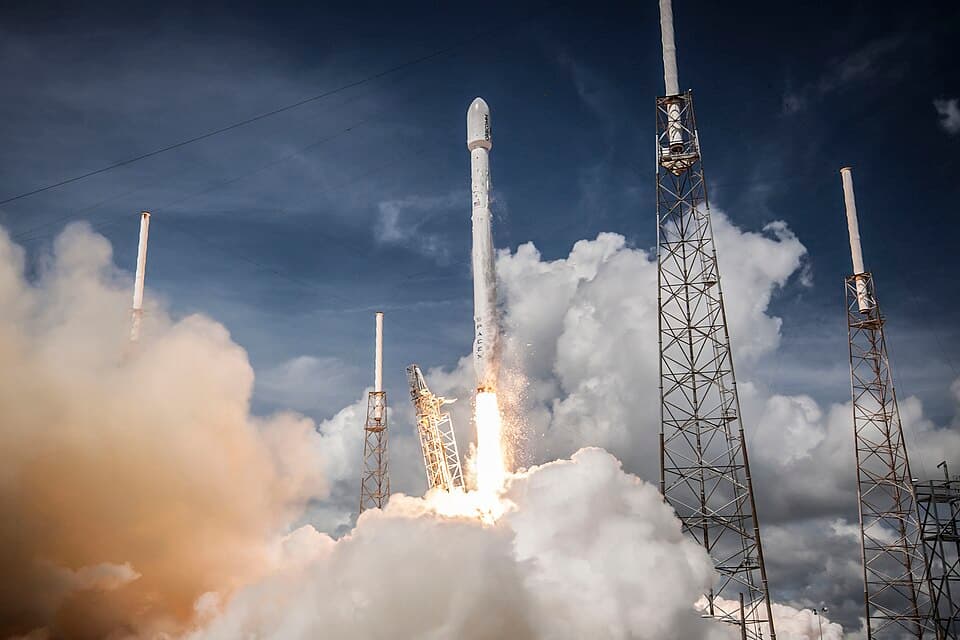
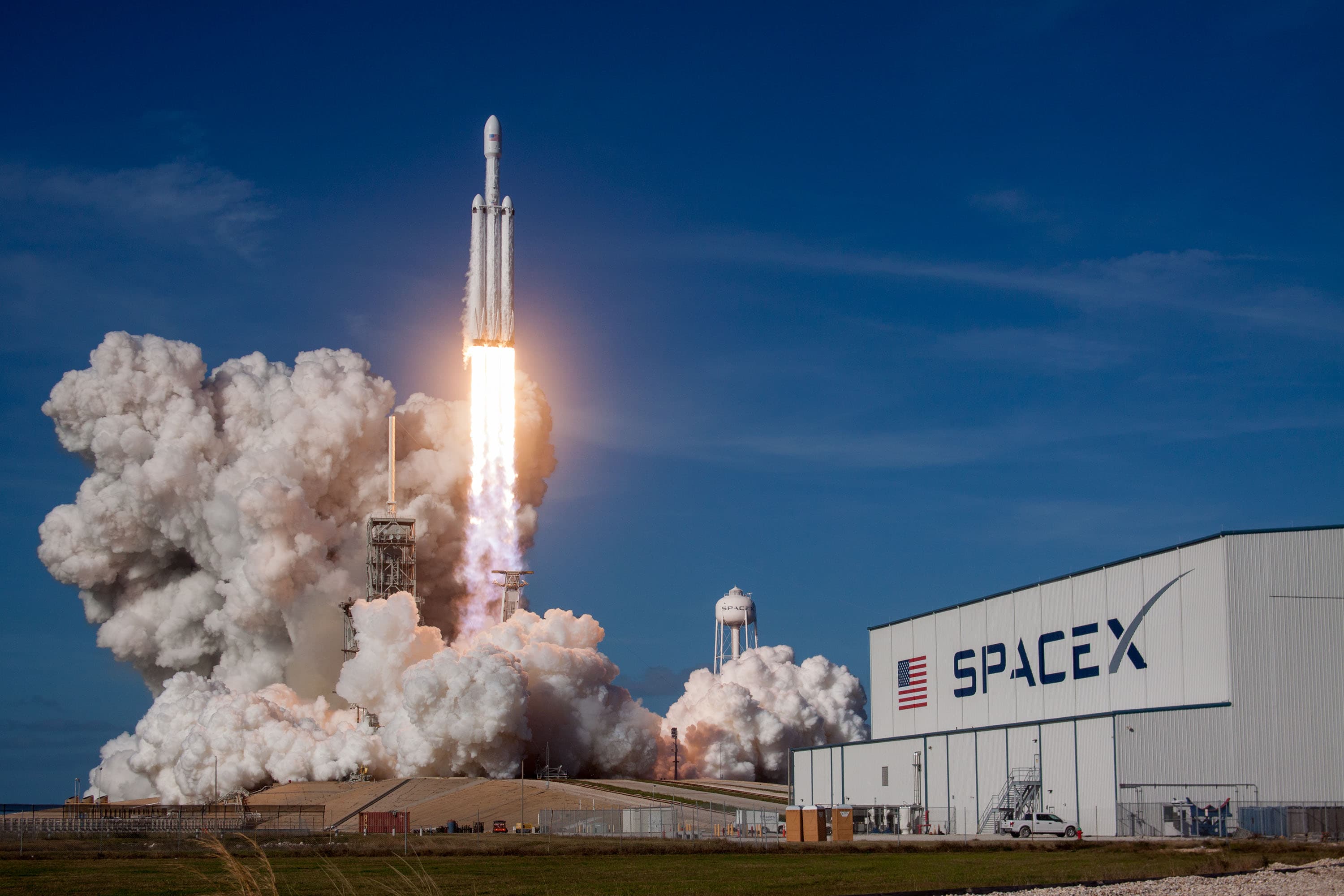
Partially reusable two-stage medium-lift launch vehicle. The world's most frequently launched orbital rocket.
Operational since 2010 and the primary workhorse for SpaceX commercial, civil, and national-security launches — 85+ Falcon-family missions flown in 2026 by mid-July, with the fleet leader (B1067) reaching a record 36th flight.
Payload to LEO22,800 kg
Payload to GTO8,300 kg
Height70 m (229.6 ft)
Total Launches665+ (Falcon family, late June 2026)
Success Rate99.8%
Booster Landings~635 (cumulative, Falcon family; 635th landing on July 9, 2026)
Most-Reused Booster36 flights (B1067, July 9, 2026 — orbital reuse record, chasing the Space Shuttle's 39)
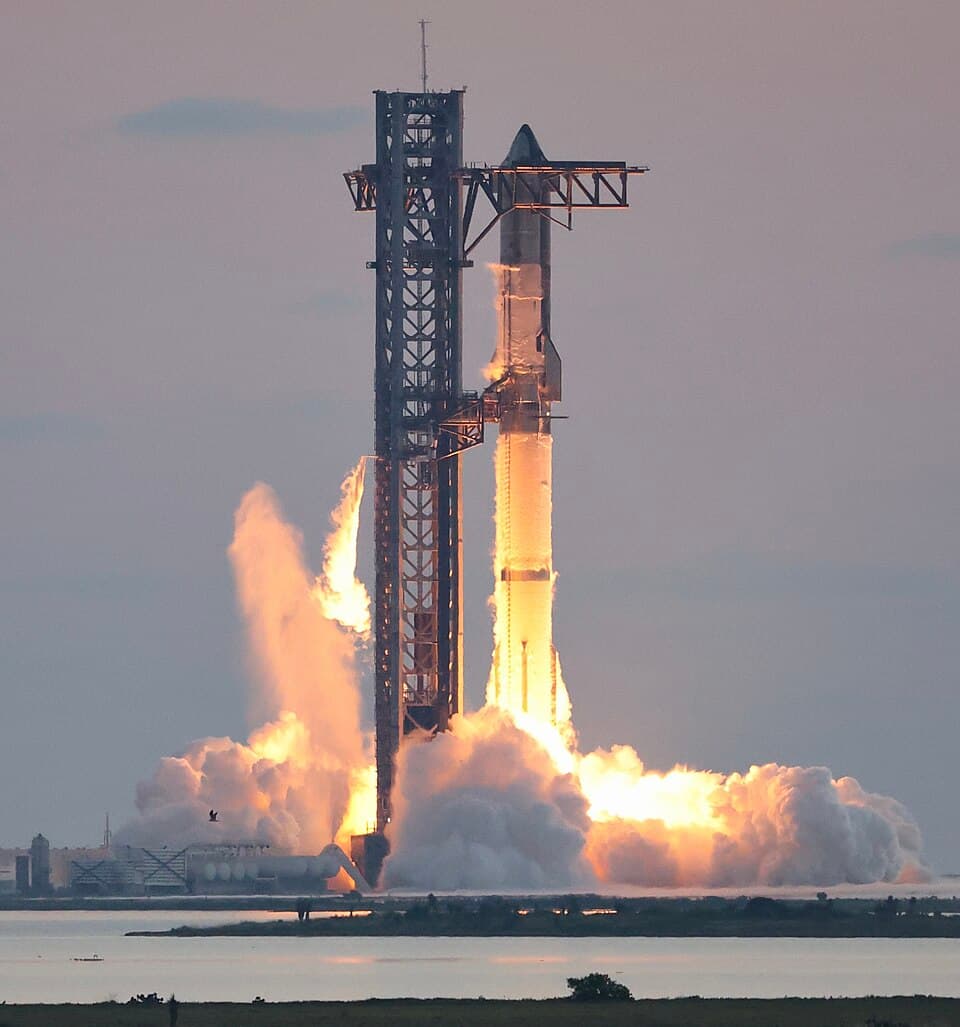
Fully reusable super-heavy-lift launch system designed for missions to the Moon, Mars, and beyond. V3 (Block 3) variant with Raptor 3 engines is the production version.
Integrated test campaign underway. The first Starship V3 flew on May 22, 2026 (Flight 12) from Starbase Pad 2, completing a full-duration suborbital flight and 22-simulator Starlink deploy while losing the booster on its return burn. V3/Block 3 development is focused on reusability, higher payload throughput, and future Starlink and Artemis missions.
Payload to LEO100–150 t (fully reusable)
Height121 m (397 ft)
Diameter9 m (30 ft)
Raptor Engines (booster)33 (Raptor 3 on V3)
Test Flights Completed12 (Flight 12 was the first V3 flight, May 22, 2026)
Government-focused satellite line built on SpaceX launch systems and Starlink platform technology for secure communications and other national-security missions.
Active government business line positioned alongside Starlink with a focus on secure mission sets for defense and intelligence customers.
Target CustomersGovernment and allied national-security users
AI supercomputer in Memphis, Tennessee acquired in the February 2026 xAI merger. Sold as multi-year compute capacity to external AI customers, with disclosed contracts to Anthropic and Google.
Operating at 300+ MW with 220,000+ NVIDIA GPUs. Fully leased to Anthropic ($1.25B/month through May 2029) with additional capacity ramping for Google ($920M/month, ~110,000 GPUs, October 2026 through June 2029). xAI is concurrently building Colossus 2 as a unified Blackwell-only system for frontier training.
NVIDIA GPUs220,000+
Power Capacity300+ MW
Anthropic Contract$1.25B/month through May 2029
Google Contract$920M/month from Oct 2026 through Jun 2029 (~110,000 GPUs)
Fly Starship V3 Flight 13 with operational Starlink V3 satellites
The FAA closed the Flight 12 mishap investigation on July 13, 2026 (findings centered on the maiden Raptor 3 engine failures during the boostback burn), clearing Starship to return to flight. Flight 13 — the second flight of the more powerful Version 3 vehicle, carrying the program's first deployment of 20 operational Starlink V3 satellites (six with cameras to scan the heat shield) — hit an automatic abort at T-0 on July 16, 2026 when only 29 of Super Heavy's 33 Raptor engines ignited. SpaceX removed and replaced two Raptor engines on the booster; after an interim July 20 window slipped, the launch attempt is now targeted for July 23, 2026. FCC filings point to an orbital ship-to-ship propellant-transfer demonstration — a prerequisite for the Artemis HLS contract — as the next major milestone once V3 is flying reliably.
July 23, 2026 (rescheduled after July 16 abort)
Artemis lunar lander (HLS)
NASA is working with SpaceX to develop Starship HLS for Artemis III and Artemis IV. The next major milestone is the required uncrewed demonstration mission before Artemis III, followed by integration into the revised Artemis surface-landing cadence that now centers the next crewed lunar landing on Artemis IV in early 2028. With the FAA having closed the Flight 12 mishap investigation on July 13, 2026, progress now hinges on SpaceX demonstrating reliable Starship V3 flights and the in-orbit propellant-transfer capability the lunar lander depends on.
2026-2028
Mars cargo architecture
Beyond near-term lunar and Starlink V3 deployment missions, SpaceX still needs to prove Starship V3 rapid reuse with the Super Heavy booster catch, in-space propellant transfer between two Starships, and long-duration ship operations before Starship can support regular cargo missions to Mars. The S-1 explicitly anchors the long-term mission of 'making life multiplanetary' on this architecture.
SpaceX targets July 23 for Starship Flight 13 after engine swap
SpaceX is now targeting July 23 for its 13th Starship test flight after an interim July 20 window slipped, following the July 16 launch abort that halted the countdown at T-0 when four of Super Heavy's 33 Raptor engines failed to ignite. Engineers removed and replaced two Raptors on the booster before the next attempt. The mission — the second flight of the more powerful Version 3 vehicle — aims to deploy 20 next-generation Starlink V3 satellites for the first time on a suborbital trajectory, six of them carrying cameras to inspect the ship's heat-shield tiles before reentry.
Jul 20
SpaceX in talks to supply Pentagon with AI computing power
SpaceX is negotiating a multibillion-dollar arrangement to lease AI data-center computing capacity to the U.S. Department of Defense, the Wall Street Journal reported July 17. Rather than selling data centers outright, SpaceX would rent out compute for a limited period to run AI models across Pentagon operations — a move that would push the company into direct competition with Amazon, Microsoft, Google and Oracle for military cloud work. The talks are ongoing and could still fall apart; they follow SpaceX's earlier compute deals, including a roughly $45 billion multiyear contract with Anthropic and about $920 million a month from Google.
Jul 19
SpaceX shares fall below $135 IPO price for first time
SpaceX stock (SPCX) closed below its $135 IPO price for the first time on July 16, ending down about 3% near $131 amid a broader tech selloff, after a fourth straight day of declines had left it just above the line a day earlier. The slide leaves shares roughly 42% below the record high above $225 they hit within days of the company's record ~$86 billion June 12 debut, and the retreat continued into the following week. The rapid unwind of the post-listing rally has poured cold water on this year's IPO market, dragging a key gauge of 2026 debuts lower with it.
A SpaceX Falcon 9 launched 21 York Space Systems satellites for the U.S. Space Development Agency from Vandenberg Space Force Base on July 16, the third batch for the Pentagon's Tranche 1 Transport Layer and the agency's first launch after a roughly nine-month pause to work through technical and operational issues. The additions bring the proliferated low-Earth-orbit data-relay constellation to 63 of a planned 126 satellites — about half its intended size. The booster, on its fourth flight, landed on the droneship 'Of Course I Still Love You' in the Pacific.
Jul 17
SpaceX aborts Starship Flight 13 at engine ignition
SpaceX's 13th Starship test flight was aborted at T-0 on July 16 just as the Super Heavy booster began lighting its 33 Raptor engines, when four of them failed to ignite and the vehicle's flight computer automatically halted the countdown. The mission — the second flight of the more powerful Version 3 vehicle — was set to attempt the first deployment of Starlink V3 satellites on a suborbital trajectory. Elon Musk said engineers will remove and replace two Raptor engines on the booster before the next attempt, which he said is most likely early the following week.
Operations & Revenue
StatusOperational
Fully operational launch, spacecraft, broadband, and government-satellite business. SpaceX remains the world's leading launch provider (83 Falcon family launches YTD by mid-July 2026), runs Starlink and Starshield alongside its Falcon and Dragon programs, and flew the first Starship V3 on May 22, 2026 (Flight 12, which the FAA classified a mishap). The FAA closed that investigation on July 13, 2026, clearing Starship's return to flight; Flight 13 — carrying the first 20 operational Starlink V3 satellites — was aborted seconds before liftoff on July 16, 2026 when at least four Super Heavy engines failed to ignite, and SpaceX is replacing two Raptor engines ahead of a next attempt expected early the week of July 20. Following the February 2026 xAI merger, SpaceX also operates the Memphis Colossus supercomputers as an AI hyperscaler, with disclosed multi-year compute contracts worth $70B+ to Anthropic, Google, and Reflection AI. SpaceX completed the largest IPO in history on June 12, 2026, debuting on Nasdaq under SPCX at $135/share for a ~$1.77T valuation and ~$75B in proceeds; SPCX traded around $148 on July 8, 2026 for a market cap near $1.98T.
Revenue Streams
Starlink Subscriptions
Recurring broadband subscriptions for residential, roaming, maritime, aviation, enterprise, and government users on the Starlink network — SpaceX's largest and only profitable segment, generating ~$11.4B of connectivity revenue in 2025 ($3.3B in Q1 2026).
Starlink Mobile (Direct-to-Cell)
Direct-to-cell service for messaging, voice, data, and IoT connectivity, currently sold through carrier partners (T-Mobile, Rogers, KDDI, One NZ, Optus, Telstra, Salt, Entel Peru, Entel Chile, Kyivstar, Virgin Media O2). With the FCC's May 2026 approval of its ~$17B EchoStar mid-band spectrum purchase, SpaceX is moving toward selling Starlink Mobile directly to US consumers and competing with AT&T, Verizon, and T-Mobile.
NASA Crew & Cargo Missions
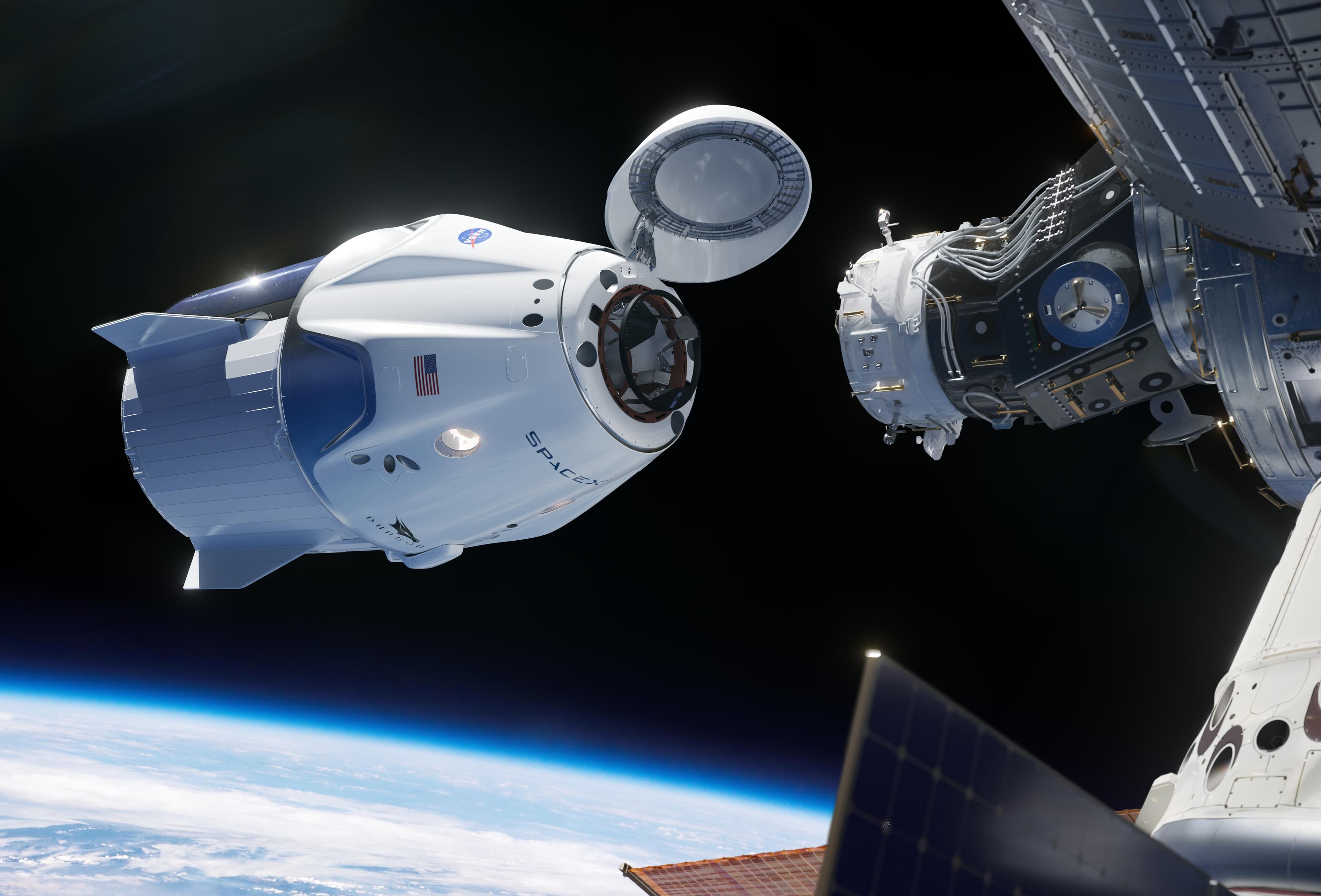
Dragon missions for NASA crew rotation, cargo resupply, and private astronaut flights to the International Space Station.
Commercial Launch Services
Falcon 9 and Falcon Heavy launches for commercial satellite operators, including rideshare missions at $275K for 50 kg to SSO.
National Security Launches
Launch services for U.S. Space Force and NRO missions, including Phase 3 Lane 2 national security launch awards, plus the growing Golden Dome missile-defense book (a $4.16B Space Force AMTI satellite award in May 2026 lifted SpaceX's Golden Dome total to roughly $6.45B).
Starshield Government Services
Government-focused satellite services built on SpaceX launch and Starlink platform capabilities for secure communications and other national-security missions.
AI Compute Services (Colossus)
Multi-year GPU compute capacity sold to external AI customers from the Memphis Colossus supercomputers (Colossus 1 acquired in the February 2026 xAI merger; Colossus 2 being built out). Disclosed customers include Anthropic ($1.25B/month for the full ~220,000-GPU, 300 MW Colossus 1 capacity through May 2029), Google ($920M/month for ~110,000 GPUs from October 2026 through June 2029), and Reflection AI (up to $6.3B, ~$150M/month from July 2026 through 2029 for NVIDIA GB300 capacity at Colossus 2).
Key Metrics
Employees
22,000+ (full-time, Q1 2026)
Est. Annual Revenue
$18.67B consolidated 2025 (incl. xAI); space business ~$15.5B (Starlink/connectivity ~$11.4B + launch ~$4.1B)
Falcon Booster Landings
~635 (Falcon family; B1067's July 9, 2026 landing was SpaceX's 635th)
Valuation
SPCX traded ~$124 on July 18, 2026 — below its $135 IPO price for the first time (down from a June 16 intraday high near $226); IPO priced at $135/share (~$1.77T) on June 12, 2026
2026 Falcon Launches
84+ Falcon family launches YTD as of July 16, 2026, the latest being the July 16 SDA Tranche 1 Transport Layer national-security mission (21 satellites) from Vandenberg; a July 13 Starlink mission marked the 600th reflight of a flight-proven Falcon booster. Gwynne Shotwell has guided to ~140–145 Falcon 9 flights for the full year
2025 Launches
165 Falcon missions (annual record; 167 orbital flights incl. Starship)
Starlink Customers
12M+ (crossed 12M on June 4, 2026; ~27,700/day adds); SpaceX targets ~25M active users by year-end 2026
Disclosed AI Compute Backlog
$70B+ (Anthropic $1.25B/mo + Google $920M/mo through 2029; plus Reflection up to $6.3B at Colossus 2)
Timeline
2026xAI merger and public IPO filing
SpaceX absorbs xAI in an all-stock deal in February 2026, then on May 20, 2026 files a public S-1 to list on Nasdaq under ticker SPCX at an implied valuation near $1.75T, with pricing expected June 11. The filing discloses $18.67B in 2025 consolidated revenue, a $2.59B operating loss, and $6.58B adjusted EBITDA.
2026First Starship V3 flight (Flight 12)
On May 22, 2026 the first Starship V3 launches from Starbase Pad 2. The upper stage completes a full-duration suborbital flight, deploys 22 Starlink simulators, and splashes down in the Indian Ocean, while the Super Heavy booster is lost during its return burn.
2026FAA classifies Flight 12 a mishap and grounds Starship V3
On May 27, 2026 the FAA formally classifies Starship Flight 12 as a mishap and requires SpaceX to complete an investigation — overseen by the agency — before Flight 13 can fly. The Super Heavy booster had failed to ignite all planned engines during its boostback maneuver, cutting the burn short and ending in the loss of the booster.
2026$4.16B Space Force Golden Dome AMTI award
On May 29, 2026 the U.S. Space Force awards SpaceX a $4.16B contract to build a low-Earth-orbit constellation of airborne moving target indicator (AMTI) satellites for the Golden Dome homeland missile-defense initiative. The single award exceeds the combined prototype contracts of every other Golden Dome bidder and lifts SpaceX's total Golden Dome book to roughly $6.45B.
2026SpaceX debuts on Nasdaq in largest IPO ever
On June 12, 2026 SpaceX began trading on Nasdaq under ticker SPCX, selling 555.6M Class A shares at the fixed $135 price to raise roughly $75B at a ~$1.77T valuation — the largest IPO in history, eclipsing Saudi Aramco's 2019 record. Reported total demand exceeded $250B with an unusually large retail allocation of up to 30% of the offering, and Elon Musk retained ~82% voting control through a multi-class share structure.
2026IPO priced at $135 for $1.77T valuation
On June 3, 2026 SpaceX sets a fixed $135-per-share price for its Nasdaq IPO, targeting a $1.77T valuation and ~$75B in proceeds — the largest public offering in history. The roadshow opens June 4 with 555.6M shares on offer, Goldman Sachs leading a syndicate that includes Morgan Stanley, BofA, Citi and JPMorgan, trading expected to start under ticker SPCX on June 12, and Elon Musk retaining ~82% voting control.
On May 6, 2026 SpaceX and Anthropic announce a multi-year compute agreement under which Anthropic will use the full capacity of SpaceX's Memphis Colossus 1 data center — more than 220,000 NVIDIA GPUs and 300 MW — for $1.25B per month through May 2029. The deal is the first major external customer for SpaceX's post-xAI-merger AI hyperscaler business.
2026$30B Google Colossus 1 compute deal
An amended SpaceX S-1 disclosed June 5, 2026 reveals a multi-year cloud-services agreement with Alphabet's Google under which Google will pay $920M/month from October 2026 through June 2029 — about $30B in aggregate — for ~110,000 NVIDIA GPUs plus CPUs, memory, and related infrastructure routed through Memphis Colossus 1. With 90-day mutual termination rights after Dec. 31, 2026, the pact lifts SpaceX's disclosed AI-compute backlog above $70B alongside the May Anthropic deal, days before the Nasdaq SPCX debut.
2026Starlink crosses 12M active customers
On June 4, 2026 SpaceX announces Starlink has surpassed 12 million active customers across more than 160 countries and territories, with ~27,700 new customers added per day on average over the prior ~53 days. The constellation now exceeds 10,400 working satellites in orbit, and SpaceX uses the milestone to outline V3 satellite plans that target greater-than-100x available bandwidth at a lower 350 km operating altitude.
2026Falcon 9 booster sets 35-flight orbital reuse record
On June 8, 2026 — days after SpaceX's Nasdaq debut — Falcon 9 booster B1067 launched and landed for a record 35th time on the Starlink 10-35 mission from Cape Canaveral, the most flights ever by an orbital-class rocket stage. The milestone puts Falcon 9 within reach of the 39-flight reuse mark set by NASA's Space Shuttle orbiters, which SpaceX intends to surpass as it certifies boosters for up to 40 flights.
2026Up-to-$6.3B Reflection AI Colossus 2 compute deal
On June 22, 2026 SpaceX agreed a multi-year cloud-compute deal worth up to $6.3B under which open-source AI startup Reflection will rent capacity at SpaceX's Colossus 2 data center near Memphis, paying about $150M per month from July 1, 2026 through 2029 for access to NVIDIA GB300 chips. Reflection — focused on open-source models for government and national-security customers — joins Anthropic, Google and Cursor as a disclosed Colossus customer, deepening SpaceX's commercialization of its post-xAI-merger AI hyperscaler business.
2026Debut investment-grade bond sale priced at $25B
On June 22, 2026 — ten days after its record IPO — SpaceX launched its first-ever investment-grade bond offering, and on June 23 priced it at $25B of senior unsecured notes, upsized from an initial $20B target after demand topped roughly $89B. The five-tranche deal (coupons from 5.350% on notes due 2031 to 6.650% on notes due 2056) settled June 26 and largely refinances a $20B bridge loan taken on in March. Offering documents disclosed roughly $100.8B in cash and equivalents as of June 19, 2026 and investment-grade ratings from Moody's, Fitch and S&P; SPCX shares fell more than 10% on the day the sale launched and over 20% across five sessions as investors weighed the pace of capital raising.
In May 2026 the FCC approved SpaceX's ~$17B acquisition of EchoStar spectrum (part of a broader ~$40B sale that also gave AT&T 50 MHz), handing SpaceX 65 MHz of exclusive-use, contiguous nationwide mid-band spectrum (AWS-4, AWS-3, H-Block in the 1.9–2.2 GHz range) — its first dedicated direct-to-device spectrum, with licenses fully transferring by ~November 2027. On June 26, 2026 President Gwynne Shotwell told IPO-roadshow investors SpaceX plans to take Starlink Mobile directly to US consumers and compete head-on with AT&T, Verizon, and T-Mobile, potentially building its own terrestrial network.
2026Starfall cargo reentry capsule debut
On June 23, 2026 SpaceX launched the debut flight of Starfall, a disk-shaped cargo reentry capsule, on a Falcon 9 from Space Launch Complex 40 at Cape Canaveral. About 3.1 meters in diameter and able to carry roughly 1,000 kg, the vehicle is designed to return research and orbital-manufacturing payloads — such as pharmaceuticals — to Earth, splashing down about 700 nautical miles off the U.S. West Coast. The mission marks SpaceX's entry into the commercial cargo-return market and is the first of at least two planned Starfall demonstrations.
2026SpaceX added to the Nasdaq-100 index
SpaceX joined the Nasdaq-100 index effective July 7, 2026 — only 15 trading days after its record June 12 IPO — under Nasdaq's new fast-track rule that admits mega-listings on their 15th trading day. The inclusion forces the more than $800B of funds tracking the index to buy SPCX, though its initial weighting starts small (an estimated 0.5%-0.7%) because less than 5% of its shares trade freely. It makes SpaceX one of the first launch companies in a major U.S. large-cap benchmark.
2026Starship Flight 13 aborted seconds before liftoff
On July 16, 2026 — SpaceX's first Starship launch attempt since its June Nasdaq debut — the Flight 13 countdown triggered an automatic abort when at least four of Super Heavy's 33 Raptor engines failed to ignite during the startup sequence. The flight, carrying the first 20 operational Starlink V3 satellites, was scrubbed at Starbase. Elon Musk said two Raptor engines would be removed and replaced 'to be confident of a good flight,' with the next attempt most likely early the following week.
2025Record 165 launches & Starlink Direct-to-Cell
SpaceX sets annual launch record with 165 Falcon missions. Starlink direct-to-cell SMS service goes live in the US and New Zealand via T-Mobile and One NZ. Starship completes 7 more test flights (Flights 7–11).
2025Secondary sale values SpaceX at about $800B
A secondary share sale values SpaceX at roughly $800B, underscoring the scale of its launch and Starlink businesses ahead of public-market preparations.
2024Starship booster catch & Polaris Dawn
Super Heavy booster caught by launch tower 'chopstick' arms (Flight 5). Polaris Dawn mission reaches 1,408 km altitude — highest crewed orbit since Apollo — and conducts first commercial EVA.
2023Starship test flights begin
Starship/Super Heavy conducts first integrated flight tests from Starbase, Texas.
2020Crew Dragon Demo-2
First crewed orbital mission by a private company, sending NASA astronauts to the ISS.
2015First booster landing
Falcon 9 first stage lands successfully after an orbital mission — a historic first.
2012Dragon docks with ISS
First commercial spacecraft to deliver cargo to the International Space Station.
2010Falcon 9 first flight
Successful maiden flight of the Falcon 9 launch vehicle.
2008Falcon 1 reaches orbit
First privately funded liquid-fueled rocket to reach Earth orbit.
2002Founded
Elon Musk founds SpaceX with the goal of reducing space transportation costs.
Funding
Cumulative disclosed raise · dated rounds
Round
Date
Amount
Investors
Source
Founding
2002
$100M
Elon Musk (personal investment)
Series A–G
2005–2015
$1.5B
Founders Fund, DFJ, Google, Fidelity
Multiple rounds
2019–2024
$8.4B+
Sequoia Capital, a16z, and others
IPO (Nasdaq: SPCX)
2026
~$75B
Public markets; Goldman Sachs-led syndicate (555.6M Class A shares at $135)
Debut investment-grade bonds
2026
$25B (senior unsecured notes; priced June 23, upsized from $20B on ~$89B orders)
Public debt markets; Goldman Sachs-led syndicate (refinances March 2026 bridge loan)