
Orienspace
Bu Xiangwei
Data verified as of Jul 6, 2026
Summary
Orienspace (Oriental Space / Dongfang Space), founded in 2020 in Yantai, builds the Gravity (Yinli) family of launch vehicles. Its solid-propellant Gravity-1 is the world's largest and most powerful solid-fuel carrier rocket — sea-launched from a barge off Haiyang and capable of 6,500 kg to LEO — with two successful flights to date (January 2024 maiden, October 2025 second) and a goal of up to four flights in 2026. The company is now developing Gravity-2, a roughly 70-meter, partially reusable kerosene-liquid oxygen heavy-lift rocket powered by nine in-house Yuanli-110 engines and sized at over 20 tonnes to LEO; after schedule slips, an Orienspace official has said the debut flight is now targeted for the end of 2026, with the triple-core Gravity-3 to follow in 2027. Orienspace raised an $83.5M Series B in January 2024, added a Series B+ round in August 2025, and has been valued at roughly $823M.
Main Products
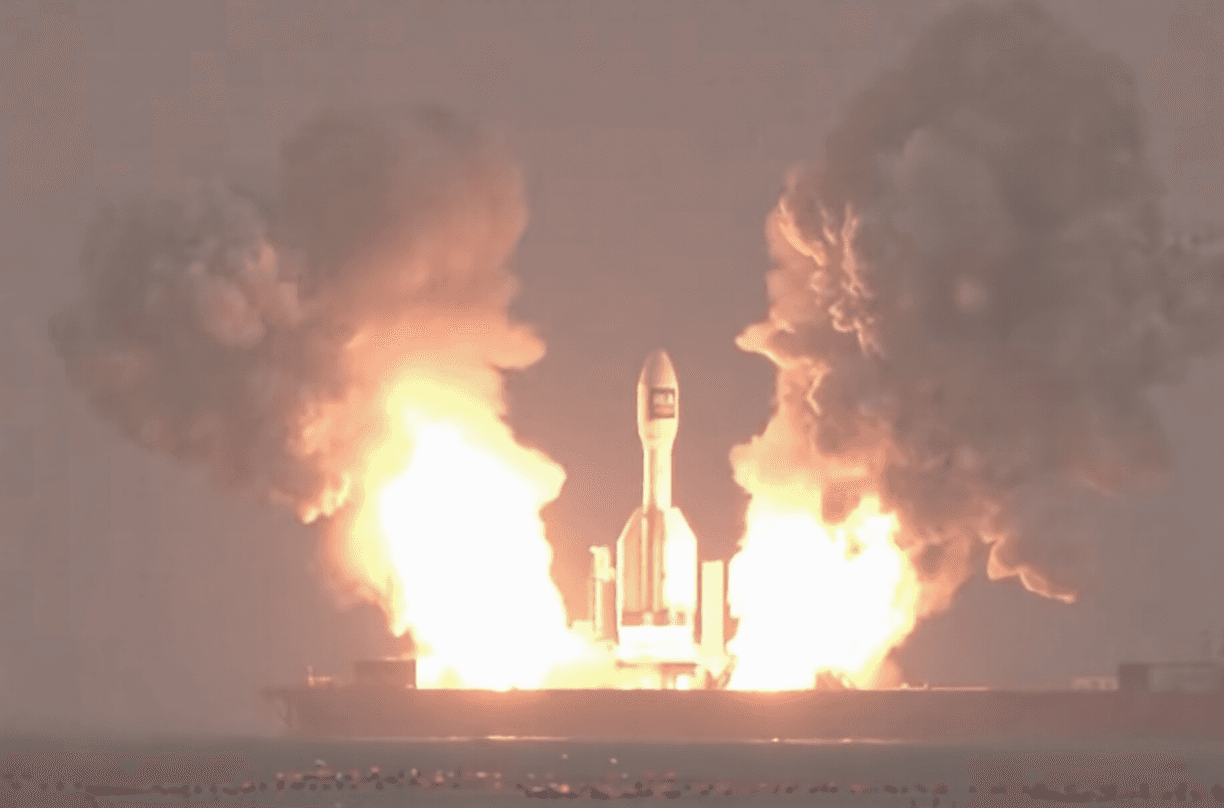
Solid-propellant medium-lift launch vehicle with a unique configuration of four ground-lit strap-on boosters and three air-lit core stages. Sea-launched from a barge off Haiyang, it is the world's largest and most powerful solid-fuel carrier rocket.
Two successful sea launches to date (January 2024 maiden, October 2025 second). Orienspace is moving to concurrent vehicle production and targets up to four flights in 2026 on a quarterly cadence.
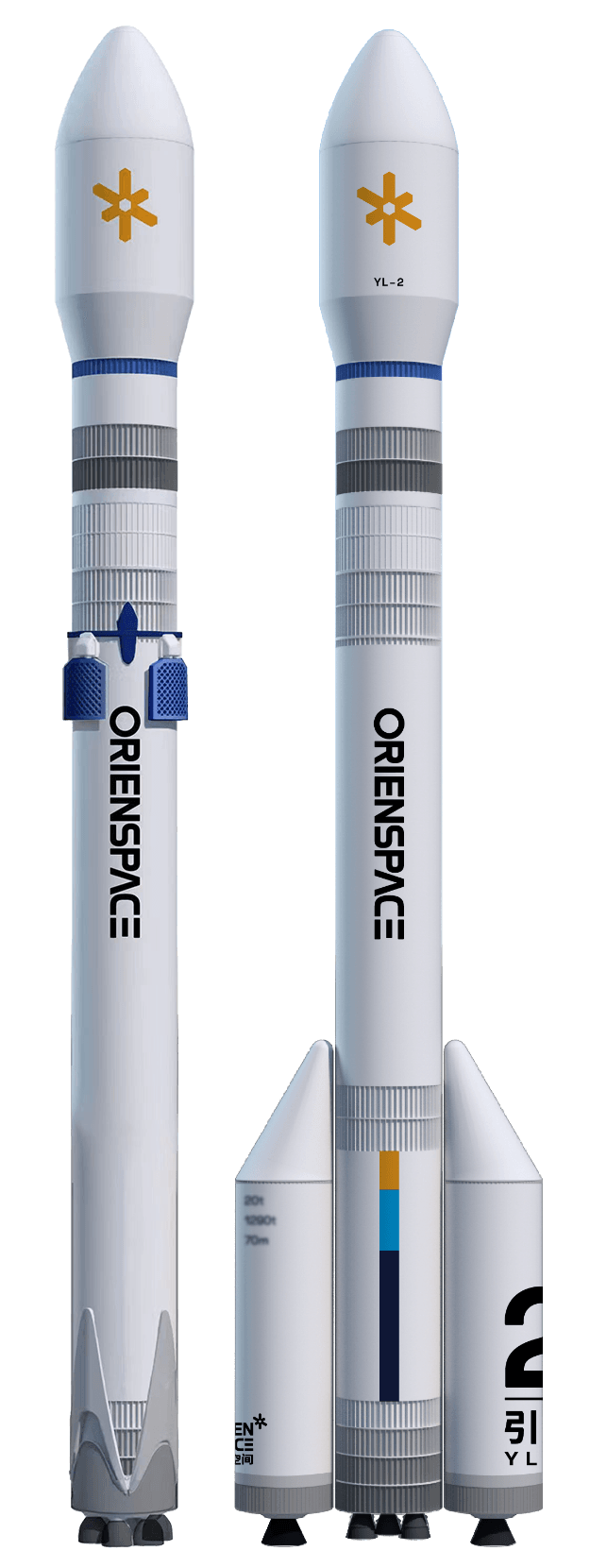
Two-stage, partially reusable kerosene-liquid oxygen heavy-lift rocket with a vertically landing first stage powered by nine in-house Yuanli-110 engines — Orienspace's higher-than-Falcon-9-class vehicle.
The Yuanli-110 engine completed its first test firing in September 2025 and a nozzle-less restart test in November 2025. An Orienspace official has said the first flight is now targeted for the end of 2026 (a slip from earlier targets), with initial flights potentially using YF-102 engines while Yuanli-110 matures.
What's Next
Scale Gravity-1 launch cadence
Fly the third Gravity-1 — the first to demonstrate the vehicle's full lift capability and being prepared at Haiyang for a constellation-deployment ('one-rocket, thirty-satellite') mission — then move from sequential to concurrent vehicle production to reach up to four Gravity-1 flights in 2026 on a quarterly schedule, while cutting launch costs a further 10-15%. With no 2026 Gravity-1 flight yet as of early July, hitting the four-flight goal now looks increasingly tight.
Operations & Revenue
Gravity-1 is operational with two successful sea launches and remains the world's largest solid-fuel carrier rocket; Orienspace is targeting up to four Gravity-1 flights in 2026 on a quarterly cadence, with the third vehicle being prepared for a constellation-deployment mission (no 2026 flight had occurred as of early July). The reusable kerolox Gravity-2 is in development, with its Yuanli-110 engine through initial and nozzle-less restart firings; an Orienspace official has said its debut flight is now targeted for the end of 2026, with the triple-core Gravity-3 to follow in 2027.
Revenue Streams
Dedicated solid-fuel launches of the sea-launched Gravity-1 from a barge off Haiyang in the Yellow Sea, primarily for Chinese commercial Earth-observation and constellation customers.
Key Metrics
Timeline
An Orienspace official confirms the reusable kerolox Gravity-2 will now make its debut flight at the end of 2026 — a slip from earlier 2025/early-2026 targets — with the larger triple-core Gravity-3 to follow in 2027. The Yuanli-110 engine has completed initial and nozzle-less restart firings, and the company is targeting up to four Gravity-1 flights in 2026 on a quarterly cadence.
In August 2025 Orienspace closes a Series B+ financing round earmarked mainly for follow-up development and mass production of the medium-lift, reusable Gravity-2, as it targets a first test flight of the rocket. The round adds to the more than $150M raised across earlier rounds plus the January 2024 Series B.
On January 11, 2024, Gravity-1 reaches orbit on its debut from a sea platform off Haiyang, deploying Yunyao-1 weather satellites and becoming the world's largest solid-fuel carrier rocket. That same month Orienspace closes an $83.5M (600M yuan) Series B to accelerate Gravity-2.