CAS Space logo

CAS Space

APrivateFounded 2018🇨🇳Guangzhou, Guangdong, China
CEO

Yang Yiqiang

Data verified as of Jul 15, 2026

Summary

CAS Space (Zhongke Aerospace) is a 2018 commercial spinoff majority-owned by the Chinese Academy of Sciences, led by founder and chairman Yang Yiqiang — former chief commander of the state Long March 11 solid rocket. Headquartered in Guangzhou, it operates the solid-fuel Kinetica-1 (Lijian-1), one of China's most-flown commercial rockets with 14 launches and 13 successes since 2022 (carrying 105 satellites — the first Chinese commercial rocket to top 100). In March 2026 it successfully debuted the medium-lift kerolox Kinetica-2 (Lijian-2), a three-core, nine-engine rocket. The company holds ~63% of China's private launch market by volume. CAS Space filed for a $607M IPO on the Shanghai STAR Market in April 2026 at a target valuation of ~15 billion yuan (~$2.1B), with the Shanghai Stock Exchange accepting the listing application. It is scaling output at a new Zhejiang 'super factory' and developing first-stage reusability via the in-house Kinecore-2 engine (110 tf), which successfully completed a 420-second cumulative hot-fire test in March 2026.

Main Products

Kinetica-1 (Lijian-1)

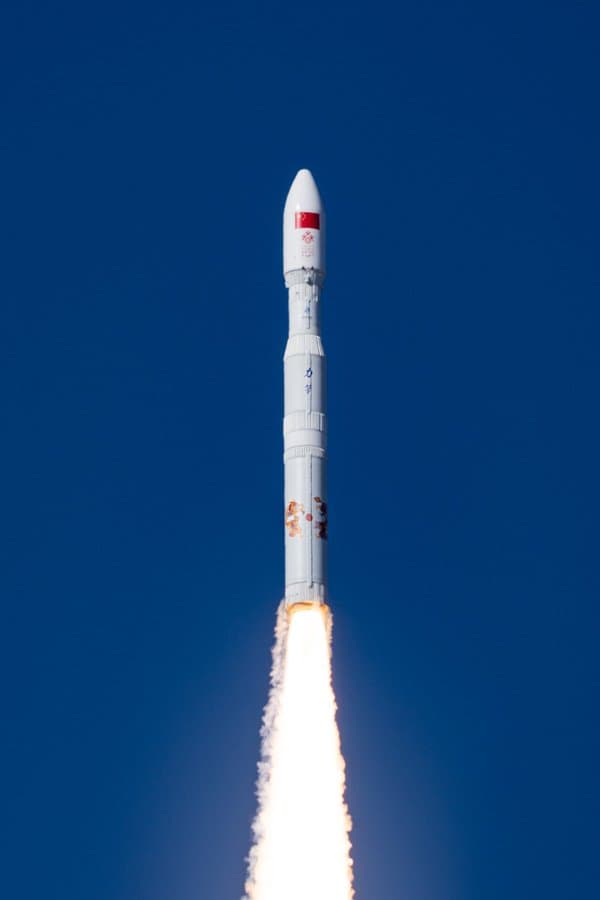
Four-stage solid-propellant small/medium-lift launch vehicle developed by a team with Long March 11 heritage — one of China's most-flown commercial rockets.

Operational from Jiuquan since 2022 with 14 launches and 13 successes (one December 2024 failure). CAS Space plans up to six to eight flights in 2026, including sea launches from the Eastern Maritime Spaceport.

Payload to LEO2,000 kg
Payload to SSO1,500 kg (500 km)
Height30 m
Diameter2.65 m
Liftoff Mass135 t
PropellantSolid (4 stages)
Launch Record14 launches, 13 successes
First FlightJul 27, 2022 (success)
Kinetica-2 (Lijian-2)

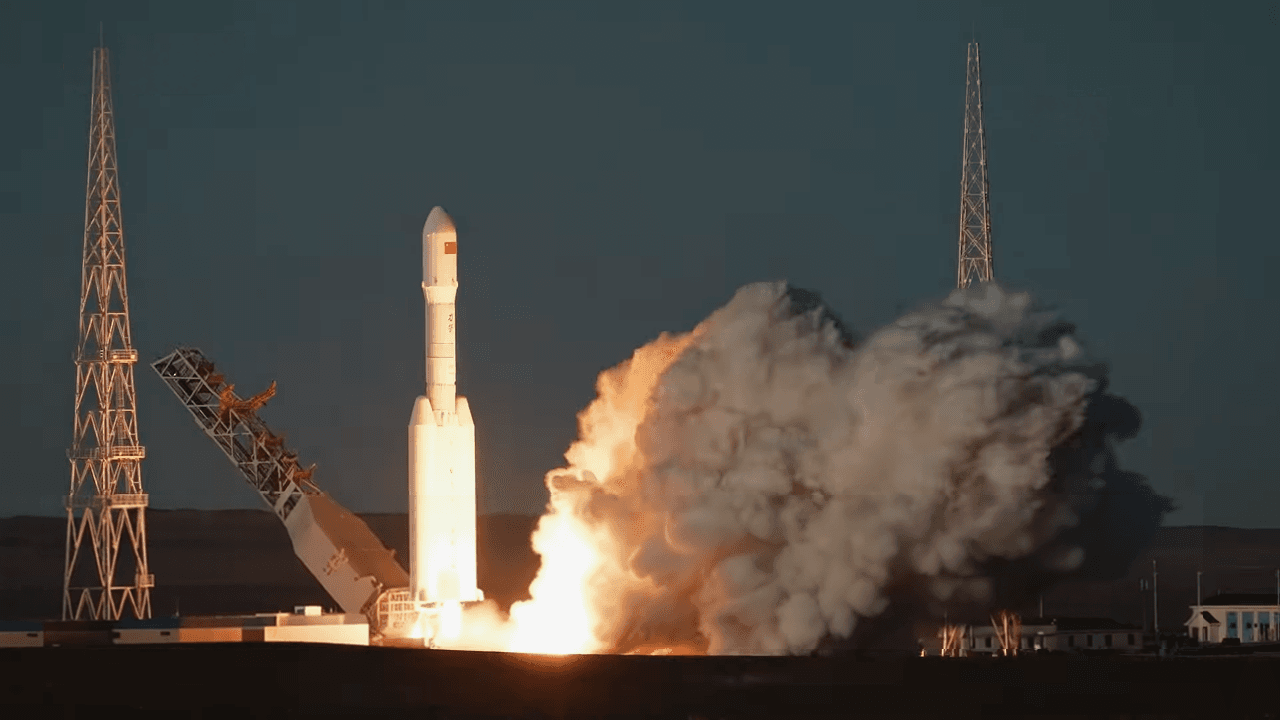
Medium-lift kerosene-liquid oxygen rocket with a three-core (tri-body) first stage powered by nine YF-102 engines — CAS Space's first liquid launch vehicle, designed for future first-stage reusability.

Reached orbit on its successful March 30, 2026 maiden flight from Jiuquan, deploying a prototype of the Qingzhou cargo spacecraft. Reusability is in development, with around ten demonstration flights planned through 2028 (aerodynamic control, in-flight reignition, then landing).

Payload to LEO12,000 kg (200 km)
Payload to SSO8,000 kg (500 km)
Height53 m
Core Diameter3.35 m
Engines9 x YF-102 (kerolox, 3 per core)
ReusablePlanned (first stage, demos through 2028)
Maiden FlightMar 30, 2026 (success)

What's Next

Scale Kinetica-2 and deploy constellations

Ramp Kinetica-2 production at the new Zhejiang super factory (up to 12-20 vehicles per year) and fly its planned 2026 missions — at least four Kinetica-2 launches are targeted for the year — including Qianfan (Thousand Sails) mega-constellation batches and the first operational Qingzhou cargo flight to the Tiangong station, expected around Q4 2026.

2026-2027

Demonstrate Kinetica-2 first-stage reusability via Kinecore-2 engine

Introduce the in-house Kinecore-2 engine (110 tf, 420-second cumulative hot-fire test completed March 2026) to replace the off-the-shelf YF-102; run roughly ten flights through 2028 progressing from aerodynamic control to in-flight reignition and then propulsive landing, alongside a planned ~100 km VTVL test of the Lihong-2 demonstrator later in 2026.

2026-2028

Begin sea launches and progress toward STAR Market IPO listing

Fly up to eight Kinetica-1 missions in 2026 including two sea launches using the Lijian-1H variant from the Eastern Maritime Spaceport (company says it 'already meets launch conditions'); the IPO application filed with the Shanghai Stock Exchange in April 2026 targets a $607M raise at ~$2.1B valuation — advance through CSRC review toward a STAR Market listing, with CAS Space positioned to potentially become China's first listed commercial-launch firm after LandSpace's listing was suspended.

2026

Advance suborbital space tourism vehicle

Mature the crewed suborbital tourism vehicle and its Lihong test platforms toward a vehicle ready around 2027 and commercial service from 2028; space tourism is listed as a stated business line in the IPO prospectus.

2027-2028

Recent News

View all →

Operations & Revenue

StatusOperational

Kinetica-1 has flown 14 times with 13 successes since 2022, deploying 105 satellites and becoming the first Chinese commercial rocket to top 100. Up to eight Kinetica-1 flights are planned for 2026, including two sea launches. The medium-lift kerolox Kinetica-2 debuted successfully in March 2026, with three additional Kinetica-2 flights planned for 2026. CAS Space holds ~63% of China's private launch market by volume and filed for a $607M IPO on the Shanghai STAR Market in April 2026 (valuation: ~$2.1B). It is scaling production at its new Zhejiang super factory and the Kinecore-2 engine (110 tf, tested March 2026) is on track to enable first-stage reuse by 2028.

Revenue Streams

Kinetica-1 Launch Services

Dedicated and rideshare small/medium-lift launches on the solid-fuel Kinetica-1 from Jiuquan for Chinese and international commercial payloads, with sea launches from the Eastern Maritime Spaceport planned for 2026.

Kinetica-2 Launch Services

Medium-lift kerolox launches for satellite-internet mega-constellation deployment (including Qianfan batches) and cargo missions such as the Qingzhou spacecraft to China's space station.

Suborbital Tourism & Research

Suborbital test platforms (Lihong-1 and the reusable Lihong-2) and a planned crewed suborbital space-tourism vehicle targeted to be ready around 2027 with commercial service from 2028.

Key Metrics

Est. Annual Revenue

Not publicly profitable; IPO prospectus shows 2024 revenue ~243M yuan with cumulative net losses of roughly 2.5–3.9B yuan over four years amid heavy R&D spending

Valuation

~15B yuan (~$2.1B) (STAR Market IPO target, filed April 2026; ~11B yuan last private round)

Kinetica-1 Launches

14 launches, 13 successes (105 satellites, 15+ tonnes)

Kinetica-2 Payload to LEO

12,000 kg (200 km)

Kinetica-2 Maiden Flight

Mar 30, 2026 (success)

Parent

Chinese Academy of Sciences (majority owner)

Timeline

2026Kinetica-1 Y13 — 100 satellites milestone

On May 15, 2026, the 13th Kinetica-1 flight (Y13) delivers five Earth-imaging satellites from Jiuquan, bringing the total satellites launched by the Kinetica series to over 100, with cumulative payload mass exceeding 18 tonnes.

2026Kinetica-1 Y14 — first Chinese commercial rocket past 100 satellites

On June 15, 2026, the 14th Kinetica-1 flight (Y14) lifts eight rideshare satellites from the Dongfeng Commercial Space Innovation Test Zone, bringing the series' cumulative total to 105 satellites and making Kinetica-1 the first Chinese commercial launch vehicle to deploy more than 100 spacecraft. It is the rocket's third flight of 2026.

2026Kinetica-2 maiden flight succeeds

On March 30, 2026, the medium-lift kerolox Kinetica-2 (Lijian-2) reaches orbit on its debut from the Dongfeng commercial site at Jiuquan, deploying its payloads including a prototype of the Qingzhou low-cost cargo spacecraft — CAS Space's first liquid-propellant rocket.

2026IPO application filed and Zhejiang 'super factory' opens

On April 1, 2026 the Shanghai Stock Exchange accepts CAS Space's IPO application targeting a 4.18 billion yuan (~$607M) raise at a ~15 billion yuan (~$2.1B) valuation. On April 28 the company opens a 2 billion yuan Kinetica-2 'super factory' in Keqiao, Zhejiang, targeting up to 12 vehicles per year (up to 20 combined with Guangzhou).

2024Kinetica-1's only failure

In December 2024 a Kinetica-1 flight fails due to third-stage instability — the rocket's sole failure in its launch record to date.

2022Kinetica-1 maiden flight

On July 27, 2022, the four-stage solid Kinetica-1 (Lijian-1) reaches orbit on its debut, deploying six satellites and becoming China's most powerful solid-propellant carrier rocket at the time.

2018Founded

Yang Yiqiang founds CAS Space (Zhongke Aerospace) in April 2018 as a mixed-ownership commercial spinoff majority-owned by the Chinese Academy of Sciences, drawing leadership from CASC, CASIC, AVIC, and CAS.

Funding

RoundDateAmountInvestorsSource
Strategic & venture rounds2018-2024UndisclosedChinese Academy of Sciences and state-linked strategic investors (mixed-ownership structure)
STAR Market IPO Application FiledApril 2026Targeting 4.18B yuan (~$607M); IPO valuation ~15B yuan (~$2.1B)Shanghai Stock Exchange accepted listing application on April 1, 2026; lead underwriter Guotai Haitong Securities; R&D proceeds earmarked for Kinecore engine and reusability programs