
Beta Technologies logo

Beta Technologies

APublic (NYSE: BETA)Founded 2017🇺🇸South Burlington, Vermont
CEO

Kyle Clark

Data verified as of Jul 19, 2026

Summary

Beta Technologies is an electric aerospace company building the ALIA aircraft family, electric propulsion systems, charging infrastructure, batteries, and flight-critical systems for cargo, passenger, medical, and defense markets. Founded in 2017 by Kyle Clark, the company went public on the NYSE in November 2025 and uses a stepwise commercialization path centered on certifying its conventional ALIA CTOL aircraft first while scaling motor, charger, and engineering services. By Q1 2026, Beta had grown its aircraft backlog to 991 units worth $3.9 billion — including a new 100-aircraft Surf Air Mobility partnership — and had accumulated 139,000+ nautical miles of flight testing across a 123-site charging network. Beta was selected for seven of the eight U.S. eIPP launch programs, and U.S. Transportation Secretary Sean Duffy flew an ALIA at Vermont HQ in May 2026. In July 2026, BETA flew the first operational missions of the U.S. DOT and FAA's eVTOL Integration Pilot Program (eIPP), using the ALIA CX300 to carry United Therapeutics' manufactured organs across a ~275-nautical-mile Virginia–Maryland corridor. Q1 2026 revenue was $10.1 million, with FY2026 guidance of $39–$43 million. H500A motor certification has slipped past H1 2026 due to an unresolved FAA 'continued rotation' test challenge, while CEO Kyle Clark now targets ALIA CX300 type certification in the second half of 2027 (with the A250 eVTOL following around 2028).

Main Products

ALIA CX300

ALIA CX300

In Certification

Conventional takeoff and landing electric aircraft in BETA's ALIA family, designed for cargo, medical, and regional passenger missions using existing airport infrastructure. BETA's stepwise commercialization plan puts the CTOL aircraft into service first before the VTOL variant.

BETA is commercializing the CTOL aircraft first while continuing FAA type certification across the ALIA family. On July 10, 2026 the CX300 flew the first operational missions of the U.S. DOT/FAA eIPP, carrying United Therapeutics' manufactured organs across a Virginia–Maryland corridor.

Range336 nm max demonstrated
Cruise Speed153 kts max speed
Capacity5 passengers or 200 ft3 cargo
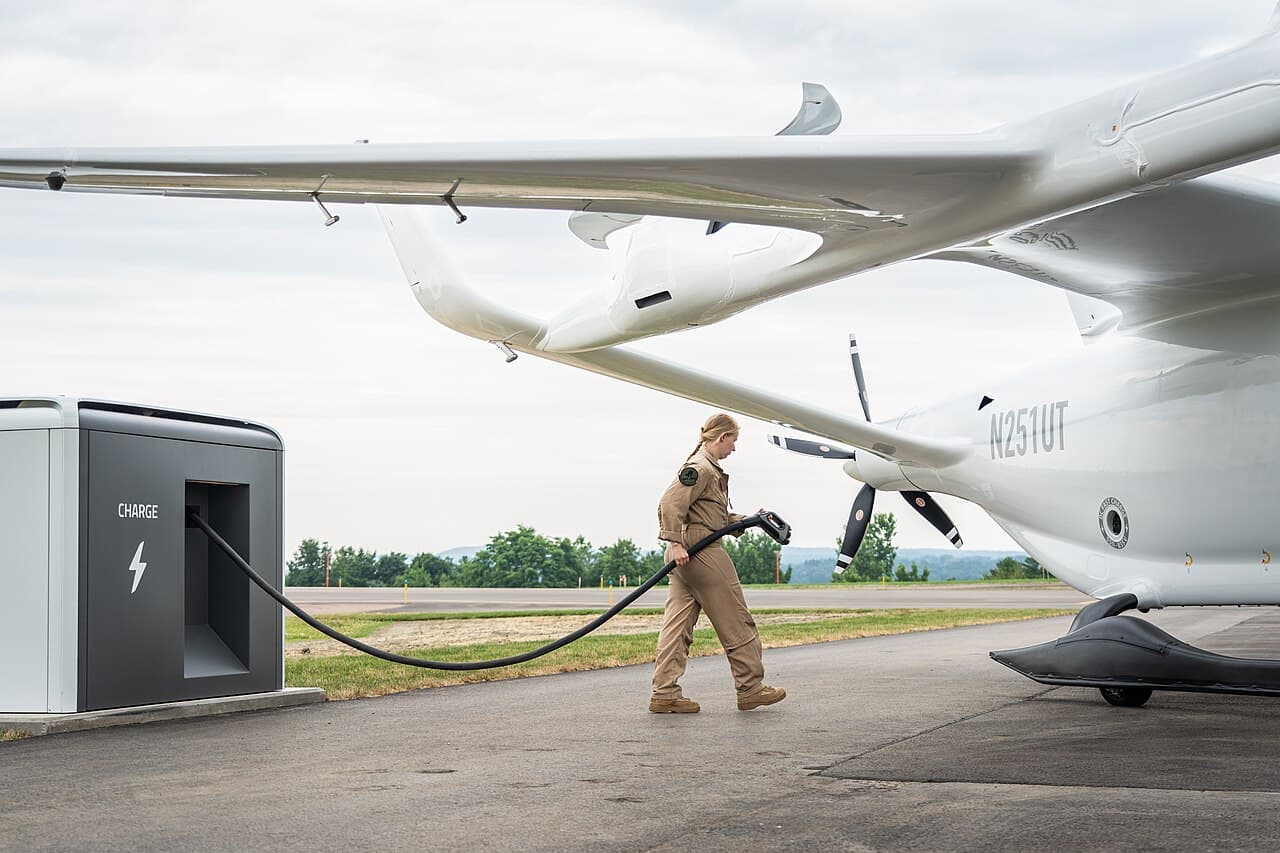
Beta Charging Network

BETA's multimodal charging ecosystem spans fixed Charge Cubes, mobile Mini Cubes, and thermal management systems for electric aircraft and EVs. It is designed as both enabling infrastructure for ALIA and a third-party charging product line.

As of Q1 2026, the network totals 123+ sites, and BETA continues to expand domestically and internationally while supporting interoperable charging for third-party aircraft.

Network Footprint123+ total sites
CompatibilityAircraft and EVs from 12+ manufacturers

H500A Electric Motor

In Certification

BETA's aerospace-grade pusher motor is sold as a standalone propulsion product as well as used inside the ALIA family, giving the company a component business beyond aircraft deliveries.

BETA completed FAA conformity work on all H500A test units in 2025, but type certification has slipped past the original H1 2026 target and remained unresolved through mid-July 2026: as of Q1 2026 results, BETA was down to a single unresolved issue — the FAA's required 'continued rotation' containment test, which engineers have struggled to consistently induce.

Max Power427 kW
Continuous Power300 kW
Efficiency97.5%

ALIA MV250

In Development

Autonomous hybrid-electric VTOL variant aimed at contested logistics, CASEVAC, and other defense missions where payload, austere operation, and optional autonomy matter more than urban air taxi economics.

BETA is advancing the defense-focused MV250 alongside broader autonomy work, targeting uncrewed ALIA flight testing in 2026.

Payload2,000 lbs
Range250+ nm with payload
Max Speed150+ KIAS

What's Next

Certify the H500A motor and the ALIA CX300

H500A electric motor certification has slipped past the original H1 2026 target: BETA is down to one unresolved issue — the FAA requires a demonstrated 'continued rotation' containment test, but engineers have been unable to consistently induce the specific failure mode. CX300 type certification has been pushed back as well: CEO Kyle Clark now targets FAA type certification in the second half of 2027 (from an earlier late-2026/early-2027 goal), with commercial operations following and the A250 eVTOL certified around 2028.

H2 2027 (CX300)

Scale U.S. eIPP operations toward paid cargo service

BETA flew the first operational eIPP missions on July 10, 2026 (ALIA CX300 carrying United Therapeutics' manufactured organs across a Virginia–Maryland corridor). The next milestone is broadening these deployments across the seven eIPP launch programs spanning at least 10 states — expanding from research/demonstration organ- and cargo-logistics flights toward routine paid cargo operations, and eventually VTOL missions, ahead of full type certification.

2026-2027

Turn Surf Air into a launch passenger operator

Use the new Surf Air Mobility firm order (25 ALIA CTOL + 75 options) to move from cargo service into commercial passenger operations, with Hawaii positioned as the first launch market. A six-to-eight-week interisland electric-aviation demonstration with Surf Air (Mokulele Airlines) and Hawaiian Airlines support began June 25, 2026, flying the all-electric ALIA CTOL to gather performance, cost, maintenance and ground-handling data. Surf Air's existing passenger demand and airport infrastructure give BETA a ready commercial base once the CX300 is certified (now targeted 2H 2027).

2026-2027

Recent News

View all →

Operations & Revenue

StatusRevenue-generating, pre-certification

Publicly listed and generating revenue from motors, chargers, charging-network access, and engineering services while advancing FAA certification of the ALIA family. Q1 2026 revenue was $10.1M (up 6% YoY); FY2026 guidance is $39–$43M; cash stood at $1.59B at March 31, 2026 (Q2 2026 results not yet released as of mid-July). H500A motor certification has slipped past H1 2026 due to one unresolved FAA test challenge ('continued rotation'); CX300 type certification is now targeted for the second half of 2027 (per CEO Kyle Clark, pushed back from an earlier late-2026/early-2027 goal), with the eVTOL A250 following around 2028. BETA was selected for seven of the eight U.S. eIPP launch programs and flew the program's first operational missions on July 10, 2026 — using the ALIA CX300 to move United Therapeutics' manufactured organs across a Virginia–Maryland corridor.

Revenue Streams

Aircraft Sales and Aftermarket Support

Sales of ALIA CTOL and VTOL aircraft to cargo, medical, passenger, and defense operators, plus follow-on support as customer fleets enter service.

Electric Propulsion & Flight-Critical Systems

Sales of enabling technologies to external aircraft programs — electric motors (e.g., Eve Air Mobility) and, increasingly, fly-by-wire flight control computers and software (e.g., Horizon Aircraft's Cavorite X7, selected July 2026) — alongside internal use across the ALIA family.

Charging Infrastructure and Network Access

Sales of Charge Cubes and related systems, plus recurring fees from access to BETA's growing multimodal charging network.

Defense and Engineering Services

Government and commercial engineering contracts tied to defense programs, autonomy, and aircraft deployment work, including Army-funded autonomous cargo efforts and broader mission integration.

Key Metrics

Employees

~1,370

Est. Annual Revenue

FY2025: $35.6M revenue; Q1 2026: $10.1M ($0.9M product + $9.2M service); FY2026 guidance: $39–$43M

Commercial Aircraft Backlog

991 aircraft (~$3.9B; 291 firm / 700 options)

Flight Distance

139,000+ nautical miles flown

Charging Network

123+ total sites

Cash & Equivalents

$1.59B (March 31, 2026)

Timeline

2026eIPP launch selection

BETA is selected for seven of the FAA and DOT's eight eVTOL Integration Pilot Program launch projects, spanning at least 10 states and using a CTOL-first deployment plan before VTOL operations follow.

2026Transportation Secretary Duffy flies ALIA at Vermont HQ

On May 29, 2026, U.S. Transportation Secretary Sean P. Duffy flew aboard BETA's ALIA aircraft at the company's South Burlington, Vermont headquarters — the first time a sitting U.S. Transportation Secretary has flown in an eVTOL. The DOT announced the visit on June 1, framing the flight as an endorsement of BETA's role across the eIPP and of advanced air mobility more broadly.

2026Launches electric aircraft demonstration program in Hawaii

Announced June 26, 2026, BETA and Surf Air Mobility — with Hawaiian Airlines supporting evaluation activities — began a six-to-eight-week electric aviation demonstration program in Hawaii flying BETA's all-electric ALIA CTOL aircraft. The campaign gathers data on aircraft performance, direct operating costs, maintenance, battery performance and ground handling across representative interisland missions to assess the feasibility of electric aircraft on Hawaii's short inter-island passenger and cargo routes.

2026Wins Horizon Aircraft flight-control-systems supply deal

On July 9, 2026, Canada's Horizon Aircraft selected BETA to supply advanced fly-by-wire flight control computers and customized software for its full-scale hybrid-electric VTOL, the Cavorite X7 — deepening BETA's third-party flight-critical-systems business alongside its motor sales. The win, following the multi-year Eve Air Mobility motor supply agreement, underscores BETA's platform strategy of selling propulsion, charging, avionics, and flight-critical systems to other aircraft programs, not just building its own ALIA aircraft.

2026Flies first operational missions of the U.S. eIPP

On July 10, 2026, BETA and a multistate collaborative completed the first operational flights of the U.S. DOT and FAA's eVTOL Integration Pilot Program (eIPP) — the first electric CTOL flights flown under the program. BETA's all-electric ALIA CX300 carried United Therapeutics' manufactured organs (for research, not a human recipient) across roughly 275 nautical miles between airports in Virginia (Virginia Tech Montgomery Executive in Blacksburg and Charlottesville-Albemarle) and Maryland (Frederick Municipal and Martin State near Baltimore), advancing BETA's long-standing organ-logistics partnership with United Therapeutics and its CTOL-first commercialization plan.

2026Launches ACES charging consortium with Archer and Macquarie

On July 16, 2026, BETA, Archer Aviation and Macquarie Capital launched ACES — America's Consortium for Electric Skyways — to build interoperable charging infrastructure at up to 250 airport and vertiport sites across the U.S. by 2030. The consortium standardizes on BETA's electric-aviation chargers built to the Combined Charging Standard (CCS), extending BETA's existing charging-network business (123+ sites) into a shared, industry-wide buildout, with initial deployment prioritized in California, Texas, Florida and New York. Macquarie Capital advises the consortium and will help arrange the capital to fund site acquisition and construction.

2025IPO, 100,000+ flight miles, and component expansion

Lists on the NYSE under the ticker BETA, surpasses 100,000 nautical miles flown, grows its charging network to 107 total sites, and lands a 10-year electric motor supply opportunity with Eve Air Mobility worth up to $1B.

2024Series C financing and production ramp

Raises $318M in Series C financing led by QIA to support certification and commercialization, while ramping output from its nearly 200,000-square-foot Vermont production facility and preparing initial customer deliveries.

2022Cross-country flight and military contracts

Kyle Clark flies an ALIA prototype over 1,400 miles from Plattsburgh, New York to Bentonville, Arkansas, charging at Beta's own charging stations along the route — demonstrating the viability of the charging network. Secures U.S. Air Force Agility Prime contracts.

2021ALIA first flight and UPS order

The ALIA conventional takeoff (CX300) variant completes its first flight. UPS places an order for 10 ALIA aircraft with options for up to 150, validating Beta's cargo delivery strategy. Raises $368M Series A from Fidelity and others.

2019United Therapeutics partnership

Partners with United Therapeutics to develop electric aircraft for organ delivery — a mission requiring reliable, efficient flight over medium distances. This partnership provides early revenue and a clear use case that shapes the ALIA's design.

2017Founded by Kyle Clark

Kyle Clark founds Beta Technologies in Burlington, Vermont, initially focused on developing electric propulsion systems and charging infrastructure for electric aircraft.

Funding

Cumulative disclosed raise · dated rounds

$1B$2B202120222023202420252026$1.8B raised
RoundDateAmountInvestorsSource
Series AApril 2021$368MFidelity Management & Research, Amazon Climate Pledge Fund, Breakthrough Energy Ventures
Series COctober 2024$318MQIA, Fidelity, TPG Rise Climate, United Therapeutics
IPONovember 2025~$1.10B net proceeds ($1.103B)Public investors via NYSE listing (34.33M Class A shares at $34.00)